
What You Need to Know About the Psychopathic Mind

Psychopaths can commit the most heinous crimes, yet they are often so charming and so skillfully manipulate those around them that they can hide behind a dazzling mask of normality for years, or perhaps their entire lives. Those exposed often gain worldwide fame like Ted Bundy, John Wayne Gacy, and others. Moreover, the results of various scientific studies show that 1 in every 100 people are psychopaths, who tend to blend in with the crowd like cold-blooded chameleons. Psychopathy is defined as a condition (sometimes called a personality disorder) characterized by a lack of empathy and a tendency to manipulate. But is the brain of psychopaths different from everyone else's brain?
Who are Psychopaths?
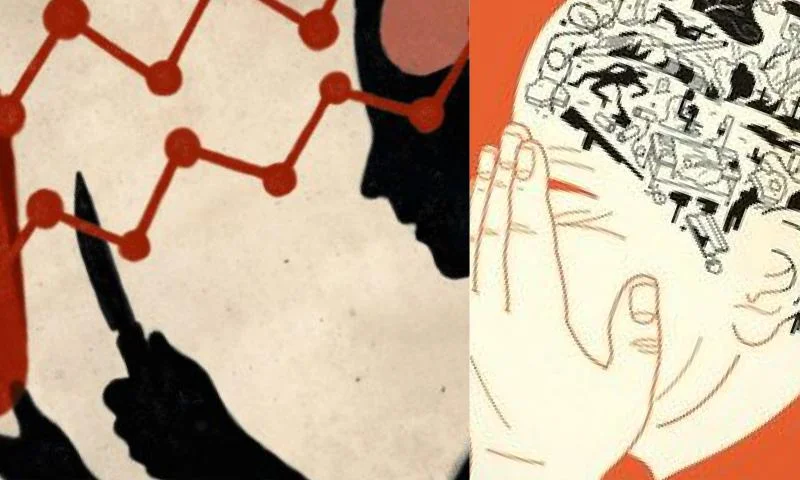
The term "psychopath" emerged in the mid-1800s and comes from the Greek words psyche and pathos, meaning "sick mind" or "suffering soul." In those years, this condition was considered a form of moral insanity. However, things began to change in the mid-twentieth century when a psychiatrist named Hervey Cleckley published "The Mask of Sanity," detailing portraits of psychopaths in his care at a university hospital in Georgia and the US. Cleckley sought out the forgotten people in psychiatry. He realized many of them were ruthless criminals, yet even repeat offenders were given short prison sentences or released from asylums because "they showed a perfect mask of sanity, an impeccable superficiality, and a strong mental health in all respects." Unfortunately, Cleckley's work was largely ignored by the medical community. By the late 1960s, the Diagnostic and Statistical Manual of Psychiatry (DSM) replaced the term "psychopathic personality" with "antisocial personality disorder," which still did not include characteristic psychopathic traits such as lack of empathy and callousness. This DSM classification is still in effect today, but while most psychopaths are diagnosed as antisocial, most people with antisocial personality disorder are not psychopaths. Psychopathy, like many other conditions, is a set of specific traits. Common traits found in psychopaths may include superficial charm, grandiose self-worth, pathological lying, manipulation, lack of remorse or guilt, lack of empathy, early behavioral problems, impulsivity, and reduced emotional responsiveness.
The Difference Between Psychopathy and Sociopathy

In 2017, studies by researchers at the University of Wisconsin-Madison revealed structural differences in the brains of psychopaths and ordinary people. The results also showed the presence of weak neural connections in the brain regions responsible for fear, anxiety, empathy, and emotionality. Recent studies have shown that the psychopathic brain is very different from the brains of other people. It should be noted that the terms "psychopath" and "sociopath" are often used interchangeably, but they are not the same, and the difference is fundamentally important. A sociopath is a person with antisocial tendencies specific to social or environmental factors. A psychopath has personality traits that are innate. Additionally, psychopaths often manipulate others, but they lead a seemingly "normal" life, often charming, that is unremarkable in the eyes of others; sociopaths are more unstable, prone to outbursts of anger, and unable to maintain an appearance of normalcy.
Causes of Psychopathy
Brain anatomy, genetics, and environment can contribute to the development of psychopathic personality traits. However, it is important to note that not all psychopathic traits and tendencies mean that a person will necessarily develop psychopathy. But what about the tendency towards psychopathy? The most famous example is Beth Thomas. According to the 1990s documentary titled "Child of Rage," Beth began to show psychopathic tendencies at an early age immediately after being sexually abused by her biological father. Later, the film, which moves her to a foster home where she can receive all the necessary help, talks about a disturbing thought process in the brain of a 6-year-old girl, leading to her tendency to develop psychopathy. However, Beth grew up to be an ordinary young woman with the help of a foster family and professionals, co-authoring a book titled "More Than A Thread of Hope" with her foster mother, who works as a nurse. Nevertheless, the main thing you need to know about psychopathy is that the brains of these people are significantly different in structure and function from the brains of others. According to a study published in the journal, psychopaths have weak neural connections between the ventromedial prefrontal cortex (vmPFC) and the amygdala, which is responsible for emotionality, empathy, and guilt. The amygdala, in turn, mediates fear and anxiety. The results not only showed differences in these areas of psychopathic brain function but were also the first study to show physical (structural) differences in the brains of psychopaths.
How Common is Psychopathy?

Although we cannot find a single answer to this question, various studies have been conducted whose results can give us an idea of how common psychopathy is. According to the results obtained in most cases, psychopaths constitute about 1% of the world's population. So have you ever talked to a psychopath? Share your story in the comments.