
Retaining Wall Calculation
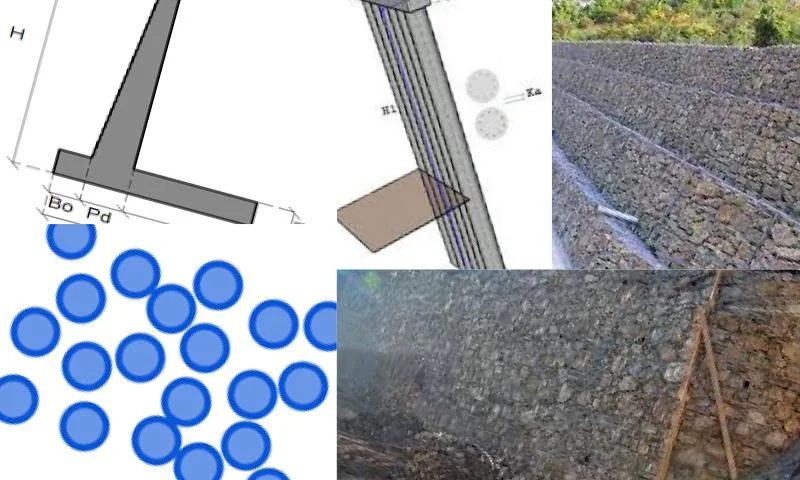
How to Calculate a Retaining Wall
Retaining wall calculation ensures that the retaining wall stands for a long time by withstanding the load or force it is exposed to. Thanks to calculations made in accordance with rules and without errors, the retaining wall can stand for a long time in line with its purpose. Retaining walls can be made in different structures and with different features depending on the characteristics of the area. Different center of gravity structures can be chosen according to the acting force, so that the wall can hold the ground it is a barrier to, and prevent landslides and water overflows. For this, in addition to the design features of the retaining walls, the ground survey of the area where the retaining walls will be built must be carried out with sensitivity. You can examine the page for detailed information. At the same time, the retaining wall must be calculated using the correct methods.
Things to Consider When Building a Retaining Wall
Retaining walls are built with very different designs according to the need. Retaining walls interact with the soils they affect and the soil pressures. Within this interaction, they are separated from each other based on limit values. Here, the wall tends to move towards the fill. The swelling of the backfill creates passive soil pressure. The absence of these situations is called the state of rest. Horizontal soil pressures act on the retaining wall with different effects. There are also soil conditions that affect the retaining wall. The fact that the soil it physically contacts or bears weight on is fed by groundwater, the softness of the soil, the presence of drainage behind or at the base of the wall are among the factors affecting the lifespan of the wall. The retaining wall calculation is made taking all these conditions into account. You need to perform a retaining wall calculation when building a retaining wall. However, in order to calculate the retaining wall, design studies must be carried out along with ground survey studies, natural geometry modeling, and preliminary dimensioning. The height of the retaining wall should be ensured to be suitable for natural conditions, and if groundwater problems are experienced, the design should be appropriate for these conditions.





