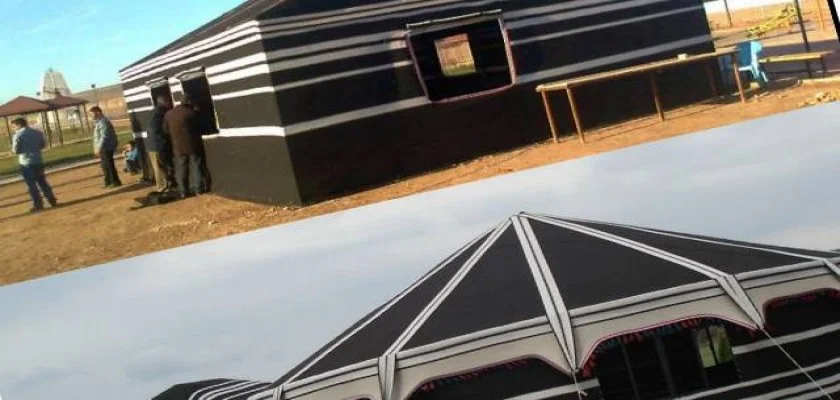
Accommodation in Hair Tents
Tents are shelters made from thick cloths, felt, leather, or woven hair, supported by one or more poles. In ancient times, merchants and businessmen would lodge in these shelters, such as the
hair tent, when traveling to other cities for trade. The awning on the side of Ottoman warships was also called a tent. In earlier times, these awnings on the captain's ship were made from fabrics called 'seraser'. Later, they began to be made of green fabric, and finally velvet. Tents, used as shelters in ancient times and still today, come in various forms and shapes. These tents were a primary form of shelter for all people in prehistoric times, alongside caves.
Tents in Architecture and Art History
It is important to note that many architects have drawn inspiration from tents in various elements of their designs. Therefore, tents hold a significant place in the history of architecture and art. The nomadic Turks, who were forced to live a migratory life for centuries, used various forms of these easily transportable and erectable dwellings, which could also be dismantled. Besides 'tent', these dwellings were also known by other names such as: Oba, otak, kerekü, gereke, ev, iv, iy, çerge, çergi, çatır, and çetir. Before the Ottoman era, tents were always made of cloth. The cloths used for tents were a specific type of fabric woven from hemp yarn, which was very thick, durable, and resistant to rain, wind, and cold, and was called 'tent cloth'. These models, due to their elegant and pleasing designs, were completely waterproof. In ancient times and even today, sewing this fabric and making tents was a distinct art in Turkey, and only skilled artisans could practice it. The simplest forms of Ottoman tents were cloth tents with two sloping roofs and triangular coverings on the sides, stretched between two poles about one and a half human heights. These simple tents also had variations in their shapes and models.
www.otantikkilcadir.gen.tr